
Discovering the Small Patagonia Tour Benefits: A Journey Like No Other

There is a certain magic that unfolds when we step into the vast, untamed wilderness of Patagonia. The wind whispers ancient stories, the mountains stand as silent sentinels, and the glaciers gleam like frozen cathedrals under the southern sun. Traveling through this breathtaking land in a small group allows us to savor every moment, every detail, and every sensation with a depth that larger tours simply cannot offer. The benefits of small group tours to Patagonia are as rich and varied as the landscape itself, inviting us to explore with intimacy, mindfulness, and a profound connection to nature and culture.
Embracing the Intimacy: Small Patagonia Tour Benefits
When we embark on a small patagonia tour, the experience transforms from a mere sightseeing trip into a shared adventure that feels personal and authentic. Unlike the bustling crowds of large groups, a small tour offers a quiet space where we can truly listen—to the crunch of snow beneath our boots, the distant call of a condor, or the gentle murmur of a glacial stream. This intimacy fosters a sense of camaraderie among travelers, creating bonds that are as enduring as the landscapes we traverse.
One of the most tangible benefits is the flexibility small groups afford. Our guides can tailor the itinerary to the group's pace and interests, allowing us to linger longer at a hidden lagoon or take a detour to a secluded viewpoint. This adaptability means we are not just observers but participants in the unfolding story of Patagonia. The smaller size also means less environmental impact, preserving the pristine beauty of the region for future explorers.

The Sensory Richness of Patagonia in Small Groups
Patagonia is a symphony of sensory experiences. The crisp, clean air fills our lungs with each breath, carrying the scent of pine and wildflowers. The colors shift subtly throughout the day—from the soft pastels of dawn to the fiery hues of sunset reflecting off granite peaks. Traveling in a small group allows us to absorb these details fully, without distraction or haste.
Imagine standing at the edge of a turquoise glacial lake, the water so clear it mirrors the sky and mountains like a polished gem. In a small group, we can share this moment quietly, each person lost in their own reverie, yet connected by the shared awe. The gentle pace encourages mindfulness, turning every step into a meditation on the grandeur around us.
Moreover, small groups often have access to exclusive experiences—private visits to local estancias, intimate dinners with Patagonian families, or guided walks through lesser-known trails. These encounters enrich our understanding of the region’s culture and history, weaving a tapestry of memories that linger long after the journey ends.
What is the Best Month to Visit Patagonia?
Choosing the right time to visit Patagonia is crucial to fully appreciate its wonders. The region’s climate is famously unpredictable, but generally, the months from November to March offer the most favorable conditions. During this Southern Hemisphere summer, the days are longer, the weather milder, and the trails more accessible.
In these months, the landscape bursts into life—wildflowers bloom in vibrant colors, wildlife is more active, and the glaciers reveal their intricate patterns without the heavy snow cover of winter. Small group tours during this period can take advantage of the extended daylight to explore deeper into the wilderness, capturing the essence of Patagonia in all its glory.
However, traveling in the shoulder seasons of October or April can also be rewarding. The crowds thin out, and the landscape takes on a quieter, more introspective mood. With a small group, we can adapt to the changing conditions, making the most of every opportunity to witness Patagonia’s raw beauty.

Personalized Attention and Expert Guidance
One of the most compelling reasons to choose a small group tour lies in the quality of guidance and personalized attention we receive. Our guides are not just experts in navigation and safety; they are storytellers, naturalists, and cultural ambassadors who bring Patagonia to life through their knowledge and passion.
In a small group, the guide can engage with each traveler, answering questions, sharing insights, and tailoring the experience to individual interests. Whether we are curious about the geology of the Torres del Paine, the migratory patterns of Andean condors, or the traditions of the indigenous Mapuche people, the guide’s expertise enriches every step of the journey.
This personalized approach also means that logistical details—transportation, meals, accommodations—are handled with care and precision, allowing us to immerse ourselves fully in the adventure without distraction. The sense of security and comfort that comes from this attention to detail enhances our ability to relax and absorb the profound beauty around us.
Sustainable Travel and Meaningful Connections
Traveling in small groups aligns naturally with the principles of sustainable tourism, which is essential in a fragile environment like Patagonia. By limiting the number of travelers, we reduce our ecological footprint, helping to preserve the delicate ecosystems and wildlife habitats that make this region so unique.
Moreover, small group tours often support local communities directly, choosing family-run lodges, local guides, and authentic cultural experiences over mass tourism. This approach fosters meaningful connections between travelers and the people who call Patagonia home, creating a cycle of respect and mutual benefit.
In our shared journey, we become more than visitors; we become stewards of this extraordinary land, carrying its stories and lessons back to our own lives. The slow, deliberate pace of a small group tour invites reflection and gratitude, reminding us of the profound interdependence between humans and nature.
A Journey That Transforms
As we look back on our time in Patagonia, it becomes clear that the benefits of traveling in a small group extend far beyond convenience or comfort. They touch the very essence of what it means to explore—to be present, to connect, and to grow.
The landscapes we have wandered through are not just backdrops but living, breathing companions on our journey. The friendships forged in the quiet moments around a campfire or on a mountain ridge become part of the story we carry with us. And the lessons learned from this wild, beautiful place inspire us to seek out wonder and authenticity wherever we go.
Overview of the Three Patagonian Cathedrals: Ushuaia, El Calafate, El Chaltén
As one can imagine, Patagonia is a vast territory across Argentina and Chile's southern regions. Making a comparison in terms of extension, Patagonia is larger, in terms of square kilometers, than California and Texas combined. So let's break down the main highlights in its territorial extension.
Heading south in the Argentine Patagonia region, the main enclave is Ushuaia, a city built to fulfill different functions, but mostly as a base for expeditions beyond the end of the world, as it is considered. From this unique spot, expeditions to Antarctica depart with different purposes, but the main one is to support those multifunctional science bases along the Antarctic coast. Recently, with the aim of satisfying travelers' curiosity, tourism expeditions have started to expand operations in this remote part of the globe.
Not resting relevancy, Ushuaia itself, is one of the greatest points to explore the Beagle Channel marine fauna, such as penguin colonies, or to embrace a natural exploration of Tierra del Fuego National Park. In both cases, Ushuaia, due to its remoteness and this specific functionality, is one of the most captivating regions in Southern Argentina Patagonia.

Located northwest of Ushuaia, El Calafate emerges in the Andes steppe and is recognized as one of the world's most significant glacier regions. Although most visitors anticipate encountering the Perito Moreno Glacier directly, the area surrounding this southern city offers many other attractions.
El Calafate sits on the edge of wild Patagonia and serves as the main gateway to some of the most dramatic landscapes in South America. The town itself overlooks the turquoise waters of Lago Argentino, where glacial sediments give the lake its striking milky-blue color. Along its shores, the Reserva Laguna Nimez offers a quieter experience, with walking trails through wetlands filled with Chilenan flamingos, black-necked swans, and other birdlife—an unexpected contrast to the icy environments nearby.
The true highlight of the region lies inside Los Glaciares National Park, a vast protected area of mountains, forests, and ice fields. Here you’ll find the legendary Perito Moreno Glacier, a massive wall of ice that regularly cracks and calves into the lake with thunderous force. Elevated walkways allow close-up views, while boat trips bring you face-to-face with its towering blue ice formations. Further into the park, more remote glaciers like Upsala Glacier and Spegazzini Glacier can be reached by boat, each offering a different scale and character—Upsala vast and fragmented, Spegazzini steep and imposing.
Back in town, the Glaciarium provides scientific and cultural context, explaining how these glaciers form and why they matter globally. Nearby, Walichu Caves reveal traces of ancient human presence, with cave paintings that connect the region’s natural beauty to its deep history.
El Calafate’s appeal comes from this mix: a small, remote town anchored between vast open steppe and some of the most accessible glaciers on Earth. It’s a place where you can watch ice collapse into a lake one moment, then walk through silent bird sanctuaries or explore prehistoric sites the next—all within the same rugged Patagonian setting.
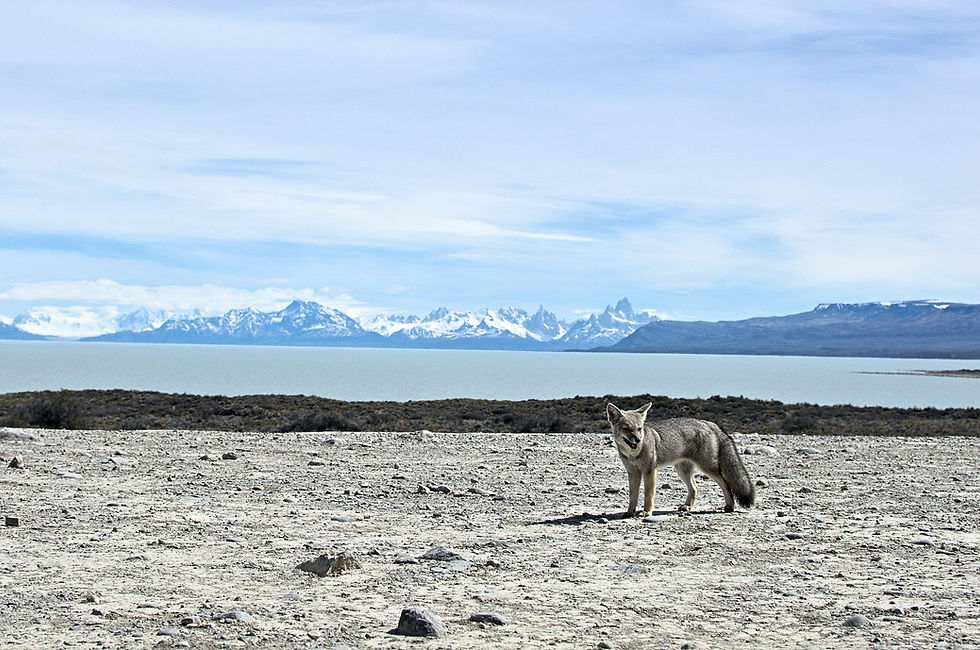
In conclusion, El Chaltén is arguably the most adventurous destination in southern Patagonia, renowned among trekkers and mountaineers who are drawn to its raw and challenging landscapes. Often referred to as Argentina’s trekking capital, it is located at the northern edge of Los Glaciares National Park, beneath the striking granite spires of Mount Fitz Roy and Cerro Torre. The region offers some of the most iconic hikes in South America, including trails to Laguna de los Tres and Laguna Torre, where panoramic views of glaciers, glacial lakes, and jagged peaks define the experience.
While El Chaltén itself is all about trekking, many travelers combine it with the famous multi-day circuits in neighboring Chile, particularly in Torres del Paine National Park. There, the renowned W Trek offers a 4–5 day journey through valleys, glaciers, and the base of the Torres towers, making it one of the most accessible yet spectacular long-distance hikes in Patagonia. For those seeking a more demanding challenge, the O Circuit is a full loop around the massif, typically taking 7–10 days and crossing remote terrain such as the John Gardner Pass, with expansive views over the Southern Patagonian Ice Field.
The best time to explore El Chaltén and undertake these treks is during the Patagonian summer, from November to March, when trails are accessible, daylight hours are long, and weather conditions—while still unpredictable—are at their most favorable. Shoulder months like October and April can also be rewarding, offering fewer crowds and striking seasonal colors, though with a higher chance of strong winds and sudden weather changes.

Although both enclaves can connect to the Chilean Patagonia by crossing a lake to the small village of Villa O'Higgins, from there, one must travel north along the Carretera Austral to reach Puerto Montt, the primary travel hub of the Chilean Patagonia.
El Cruce Andino: The route across the lakes linking the Patagonian regions of both countries.
Situated 1200 km from El Calafate, the Cruze Andino is a path that crosses several lakes to reach Puerto Varas, close to Puerto Montt, the main center of Chilean Patagonia. Traveling north from El Chaltén to El Calafate is the best route to get to Bariloche, where the Cruze Andino begins in the Argentinian Patagonia.
In this area, Patagonia reveals a unique personality. Rather than the barren southern steppe, you encounter alpine forests, deep-blue lakes, and snow-capped volcanoes. Time appears to slow along the shores of Lake Nahuel Huapi, where the air is milder and the scenery exudes an almost European atmosphere. It is from this tranquil setting that the next chapter begins—the journey across the Andes themselves.
The Cruce Andino consists of multiple transitions rather than a single journey, with each segment revealing a unique aspect of the mountains. A boat crosses Nahuel Huapi heading towards Puerto Blest, where thick forests meet the water's edge. Short overland sections lead to hidden lakes like Lago Frías, its green waters hinting at the humid Pacific climate just beyond the peaks. Quietly entering Chile, the route pauses at the small settlement of Peulla, surrounded by pristine forests and flowing rivers.
The ultimate journey across Lake Todos los Santos feels almost like a scene from a movie, with the perfect cone of Osorno Volcano rising in the distance. Slowly, the mountains part, the air becomes more humid, and the landscape changes yet again. By the time you reach Puerto Varas, and then Puerto Montt, Patagonia has transitioned from arid steppe and icy fields to verdant greenery and fjord-like coastlines.

The Chilean Patagonia: 3 essential expeditions you can't miss
The Chilean Patagonia contrasts with the Argentine side. While the Argentine Patagonia is famous for its steep, dramatic landscapes, the Chilean Patagonia is characterized by its rugged, fragmented terrain, featuring dense forests that offer travelers a distinctive regional experience. The area’s main attractions include fjords and channels, mountains, and the Austral Road.
Setting off from Puerto Montt, the adventure into Chilean Patagonia starts not on land, but on water. In this region, where the continent begins to split into islands and channels, you embark on a vessel that will transport you deep into the fjords—a realm where land and sea merge seamlessly. As the shoreline drifts away, the initial hours pass tranquilly through the inland waters of the Reloncaví Sound, with fishing villages disappearing into the mist and forested hills enveloping the ship.
Soon, the rhythm of the open road gives way to the slower, more careful pace of navigation. The vessel weaves its way south through a labyrinth of channels, entering sections of the Patagonian Fjords where the mountains soar steeply from the sea. Waterfalls emerge unexpectedly, cascading down sheer rock faces, nourished by continuous rain and melting ice. The air becomes cooler, laden with moisture, and the landscape transforms into dense temperate rainforest—thick, almost impenetrable, clinging to every available surface.
Days spent at sea expose the vastness and remoteness of this area. There are no roads or traditional towns—just isolated outposts and the sporadic appearance of a fishing boat. Heading further south, the channels unpredictably expand and contract, sometimes revealing large stretches of water, then constricting into narrow passages where cliffs appear within arm's reach. Wildlife enhances the voyage: dolphins leap beside the ship, sea lions lounge on rocky ledges, and, if fortunate, whales emerge in the distance.
A particularly unforgettable moment occurs as the ship travels through the Messier Channel, one of the country's longest fjords. In this area is the secluded settlement of Puerto Edén, which houses one of the last communities of the Kawésqar people. Although the stop is short, it is significant, serving as a reminder that human narratives endure even in these remote landscapes.
As you travel further south, the landscape turns more glacial. The ship nears the Amalia Glacier, where ice flows from the Southern Patagonian Ice Field into the ocean. From the deck, you observe a dynamic frozen world—blue ice walls, floating ice pieces, and the resonant, deep cracks of an active glacier. Here, the untamed force of Patagonia is most palpable.
As the journey approaches its conclusion, the channels start to widen, and the scenery becomes a bit gentler. The vessel sails into the Última Esperanza Sound, leading to Puerto Natales. Following days of solitude, the arrival seems somewhat sudden—a reintroduction to roads, buildings, and the gentle murmur of a small town.
However, Puerto Natales is much more than just a final stop. It serves as the gateway to one of Patagonia’s most renowned areas. From here, visitors can reach Torres del Paine National Park, where the famous granite towers stand over turquoise lakes and expansive степpe landscapes. The town itself maintains a frontier vibe—windy, modest, and closely tied to the surrounding wilderness. From Natales, excursions include boat trips to the Balmaceda Glacier and Serrano Glacier, along with trekking routes considered among the best globally.
Starting from Puerto Montt as a coastal journey, by the time you arrive at Puerto Natales, it transforms into a complete experience of Chilean Patagonia's essence—where fjords, glaciers, and human resilience shape a landscape that is both isolated and vibrantly alive.

Located at the southernmost tip of Chilean Patagonia, where the breeze bears the aroma of salt, ice, and steppe, is Puerto Natales—a tranquil frontier town that serves more as a gateway than a destination. Visitors come not for the town, but for the untamed, elemental splendor of Torres del Paine National Park that lies beyond.
Puerto Natales is located along the Última Esperanza Sound, with its modest buildings overlooking a horizon that appears constantly in flux—clouds swiftly moving, light changing, and mountains emerging and disappearing behind misty veils. The town exudes a subtle charm: wool shops, cozy cafés, gear rental outlets, and a constant buzz of excitement from trekkers gearing up for adventures in the park. Additionally, the town has historical ties to sheep ranching and the wider Patagonian culture shared with nearby Argentina, a link that becomes more apparent as you travel further inland.
A few hours to the north, the scenery becomes strikingly distinct. Torres del Paine emerges like a myth brought to life—granite towers reaching into the sky, turquoise lakes nourished by glaciers, and valleys sculpted by ancient ice. The park is named after its most famous landmark: three vertical granite spires, the “Torres,” which blaze with fiery orange hues at sunrise. Close by, the rugged peaks of the Cuernos del Paine and the vast Grey Glacier—part of the Southern Patagonian Ice Field—create a landscape that seems almost surreal.
The primary attraction here is immersion. Trekking is the leading activity, with trails that vary from day hikes to multi-day circuits. The renowned W Trek provides a compact yet breathtaking experience, leading hikers past glaciers, lakes, and the base of the towers. For those desiring a more secluded adventure, the O Circuit encircles the entire massif, traversing high passes and more tranquil areas. Beyond hiking, visitors can kayak among the icebergs on Grey Lake, ride horses across the steppe, or simply pause to observe the weather as it alters the landscape hour by hour.
Wildlife is an essential part of the experience. The park is one of the best places in South America to observe guanacos—relatives of llamas—grazing in herds across the plains. If you’re fortunate, you might spot a puma stalking these herds, particularly at dawn or dusk. Birdlife is equally compelling: the Andean condor, with its vast wingspan, circles high above cliffs, while flamingos inhabit some of the park’s saline lagoons. Foxes, rheas, and even the elusive huemul deer add to the ecological richness.
Timing your visit is crucial. The Patagonian climate is famously unpredictable, but there are patterns. The most popular months are from November to March (austral summer), when days are long, temperatures are milder, and trails are fully accessible. However, this is also when winds can be strongest and crowds peak. Shoulder seasons—October and April—offer a quieter experience, with fewer visitors and dramatic seasonal colors, though with a higher chance of cold snaps or limited services. Winter (May to September) transforms the park into a stark, snow-covered wilderness—beautiful, but suited mainly for experienced travelers prepared for isolation and harsh conditions.
Practical advice matters here more than in many destinations. Windproof clothing is not optional—it’s essential. Layering is key, as conditions can shift from sun to sleet within hours. Reservations for accommodations inside the park (refugios or campsites) should be made well in advance during peak season. And while the trails are well-marked, the scale of the landscape demands respect; this is not a place to improvise without preparation.
The connection to Argentine Patagonia is both geographic and cultural. Just across the border lies Los Glaciares National Park, home to the famous Perito Moreno Glacier and the trekking hub of El Chaltén. Many travelers combine Torres del Paine with these Argentine destinations, crossing via land border near Cerro Castillo. The ecosystems on both sides share the same windswept steppe, glacial systems, and Andean backdrops, though each has its own character—Chile offering fjords and dramatic vertical peaks, Argentina presenting vast plains and iconic glaciers.
In the end, what defines Puerto Natales and Torres del Paine is not just scenery, but scale and solitude. Even among other travelers, there’s a persistent sense that you are very small in a very large, very ancient place. The wind never quite stops, the light never quite settles, and the land feels alive in a way that is both humbling and unforgettable.

Traveling along the Carretera Austral is more about gradually immersing oneself in one of the most remote and visually stunning regions on the planet than simply taking a road trip. Extending approximately 1,240 kilometers through Chilean Patagonia, it starts in the verdant, rain-drenched north and moves into a terrain sculpted by glaciers, tectonic activity, and relentless weather. Unlike the distinct, iconic silhouette of Torres del Paine National Park, this journey offers a wilder, more seamless narrative that reveals itself slowly, kilometer by kilometer.
Where it starts and where it goes
Puerto Montt is the traditional starting point, but many travelers opt to begin a bit further south in Puerto Varas due to its picturesque location by Lake Llanquihue. From this point, the route swiftly changes into a mix of paved and gravel roads, ferry crossings, and isolated sections where fuel stations are infrequent.
The route officially ends in Villa O'Higgins, a tiny frontier village near the edge of the Southern Patagonian Ice Field. Beyond this point, there is no road—only trails and boat crossings that can eventually connect, in complex ways, to Argentina and its Route 40. That discontinuity is part of the mythos: the Carretera Austral doesn’t just end—it dissolves into wilderness.
An itinerary narrative along the road
Stage 1: Temperate Rainforest and Fjords (Puerto Montt → Pumalín Region) The initial days guide you through the lush Valdivian rainforest, one of the rare temperate rainforests remaining in the world. As you approach Pumalín Douglas Tompkins National Park, the landscape turns nearly prehistoric, with enormous ferns, trees covered in moss, and continuous rain. Volcanoes emerge suddenly from the mist, and brief hikes reveal waterfalls and secluded lagoons.
Stage 2: Hanging glaciers and marble caves (Chaitén → Puerto Río Tranquilo) Further south, after passing through Chaitén—rebuilt after a dramatic volcanic eruption—you begin to see the Andes asserting themselves more aggressively. Near Queulat National Park, the famous hanging glacier spills down a cliff face into a milky lagoon.
As you approach Puerto Río Tranquilo, one of the most iconic stops emerges: the Marble Caves on General Carrera Lake. These swirling, sculpted formations—best visited by kayak or small boat—reflect blue light in surreal patterns.
Stage 3: Ice fields and remote valleys (Cochrane → Villa O’Higgins)The southern section becomes more austere. Towns like Cochrane feel like true outposts. Here, vast steppe landscapes meet dense forests, and the influence of the Southern Patagonian Ice Field becomes dominant.
Near the end of the road, access points to glaciers and remote trekking routes multiply. The journey culminates in Villa O’Higgins, where silence and scale define the experience—glacial lakes, wind, and a sense of absolute remoteness.

Best time to travel
The optimal window is November through March (austral summer). During these months:
Roads are more accessible (especially gravel sections)
Ferry schedules are reliable
Daylight extends dramatically, giving long exploration windows
However, expect variability—rain in the north, strong winds in the south.
Shoulder seasons (October and April) can be excellent for fewer crowds and striking colors, but infrastructure becomes less predictable. Winter travel (May–September) is possible but logistically complex due to snow, limited services, and road conditions.
Connection with Argentine Patagonia
The Carretera Austral runs roughly parallel to Argentina’s Route 40, and there are several border crossings linking the two. Many travelers design hybrid itineraries:
Crossing near Chile Chico connects to Argentine steppe landscapes
Further south, complex routes (including boat crossings) can link toward Los Glaciares National Park
The contrast is striking: Chile offers lush, vertical, water-rich environments, while Argentina opens into vast, arid plains and monumental glaciers. Together, they form a complete Patagonian circuit.
The essence of the journey
If Torres del Paine is a concentrated spectacle, the Carretera Austral is a slow unfolding—a geological epic told in chapters of rain, rock, and ice. It’s not about reaching Villa O’Higgins; it’s about everything that happens along the way: the isolation, the shifting ecosystems, and the persistent sense that you are traveling through one of the last truly untamed corridors on the continent.
This is Patagonia at its most continuous and least mediated—where the road exists, but the wilderness still clearly dominates.

Patagonia—stretching across southern Chile and Argentina—is not a destination that reveals itself quickly. It is a region defined by scale, contrast, and movement: granite peaks rising above glacial valleys, endless steppe meeting ice-blue lakes, and remote routes like the Carretera Austral threading through landscapes that still feel largely untouched. From iconic Chilean highlights such as Torres del Paine National Park to the vast Argentine side, the experience expands into equally compelling terrain—an invitation to understand why discovering the Small Patagonia Tour Benefits: A Journey Like No Other is not just a concept, but a way of truly engaging with this extraordinary region.
In Argentina, Patagonia reveals itself through places like Los Glaciares National Park, where the immense Perito Moreno Glacier advances with audible cracks and thunder, and the trekking capital of El Chaltén, set beneath the dramatic spires of Mount Fitz Roy. Further north, the lake district around San Carlos de Bariloche offers a different expression of Patagonia—alpine forests, deep blue lakes, and a softer but equally striking landscape. These Argentine destinations complement the Chilean side, together forming a continuous natural system shaped by the Andes, ice fields, and wind.
In this vast and varied context, small group travel emerges as one of the most effective ways to experience Patagonia in its entirety. Traveling in a smaller group allows for a more adaptive and fluid journey—essential in a region where weather, distances, and terrain constantly redefine plans. It enables access to quieter trails, remote viewpoints, and deeper local insight, whether you are navigating glacier fronts in Argentina or remote roads in Chile.
More than a logistical advantage, small group travel aligns with the essence of Patagonia itself. In a land defined by openness and isolation, moving in an intimate setting preserves that sense of scale while enhancing immersion. It encourages a slower pace, sharper observation, and a more meaningful connection to each landscape—from the ice-carved expanses of southern Los Glaciares National Park to the rugged wilderness of the Chilean fjords. For travelers seeking to truly embrace Patagonia’s breadth and intensity, this approach offers not just a route through the region, but a way of experiencing it that feels both expansive and deeply personal.


Comments