
Ushuaia: At the Edge of the World and Gateway to the Poles

Where the jagged peaks of the Andes plunge into icy sea and glaciers meet wind-forged forests, Ushuaia rises like a promise of wildness at the southernmost tip of the Americas. Perched on the rugged shores of the Beagle Channel in Argentina’s Tierra del Fuego archipelago, this remote city stakes a literal claim at the edge of civilization — closer to the ghostly expanse of Antarctica than to Buenos Aires.
A Landscape Sculpted by Ice and Wind
Ushuaia’s setting is elemental: snow-dusted mountains reflect in the deep blues of the channel, while relentless winds born of Antarctic storms sculpt forests and coastline alike. Trees grow twisted and angled, their limbs leaning northward in a permanent dialogue with the wind, earning the local woodlands the nickname “flag forests.” The region’s oceanic climate tempers extremes, offering cool, luminous summers and snowy, fog-laden winters that echo the city’s high-latitude isolation.
A History Carved by Isolation
Long before tourism, Ushuaia’s story was defined by remoteness. In the late 19th and early 20th centuries, the Argentine government established a naval base and a prison here, placing society’s most challenging inmates at the literal end of the world. Convicts laid rail lines and built infrastructure — an irony preserved today in the “Train of the End of the World,” which carries visitors along forested trails into Tierra del Fuego National Park.
Wild Neighbors: Flora and Fauna
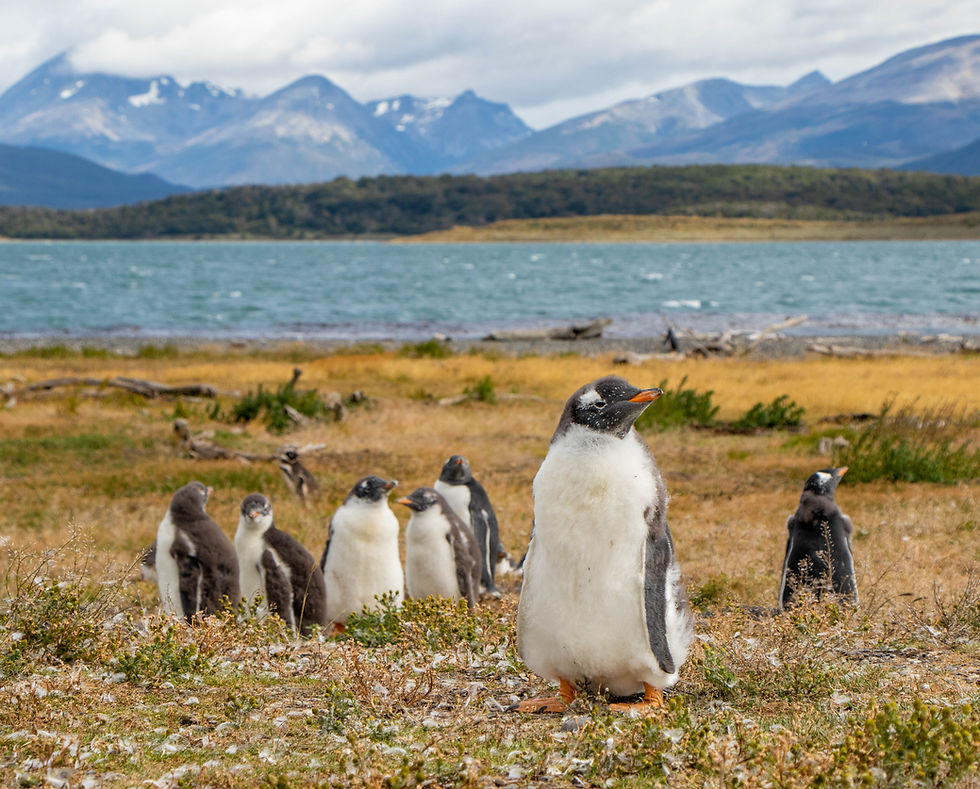
Despite its exposed location, Ushuaia sits amid thriving ecosystems. Subantarctic Magellanic forests cloak the lower slopes, while the Beagle Channel teems with marine life: cormorants line rocky islets, sea lions bask on shores, and whales and dolphins traverse kelp-strewn channels. Penguins gather on nearby islands, and trout populate mirror-bright rivers, a testament to species that have adapted to wind, cold, and dramatic seasonality.
A Gateway to the Ends of the Earth
Ushuaia’s isolation transforms into strategic advantage for those pursuing the polar frontier. Each austral summer, expedition ships line the harbor, carrying scientists, photographers, and adventurers across the turbulent Drake Passage to Antarctica. The city functions as the primary launching point for polar exploration — from small research vessels to luxury cruises navigating icy waters governed by icebergs, penguin colonies, and whales.
Supporting this role, Ushuaia has evolved into a hub for expedition logistics: outfitter shops, briefing centers, and specialized gear suppliers prepare travelers for weeks of isolation in one of Earth’s harshest climates. For many, departing from Ushuaia is both a psychological and physical milestone — the last touch of civilization before entering a realm where human presence is fleeting and nature uncompromising. Scientists studying climate change, glaciology, and marine biology rely on the port as a base, while adventurers experience the raw edge of the planet firsthand.
Living on the Brink
Life in Ushuaia is a study in adaptation. Modern cafes, galleries, and research centers thrive alongside wild landscapes, and residents maintain a constant dialogue with the elements. The wind becomes a companion, and seasonal rhythms dictate work, play, and rest. Here, “remote” does not mean isolation; it signifies immersion — a front-row seat to the wild edges of the world.
In Ushuaia, the horizon is both an end and a beginning: the last vestige of civilization before the Antarctic expanse, a place where human curiosity meets untrammeled nature, and where the pulse of the wild still sets the rhythm of life.


Comments